
Essay
The Science Behind Movie Plot Twists: Why Your Brain Loves Being Fooled
The greatest movie plot twists don't just surprise us, they reveal how easily our brains mistake assumptions for reality.
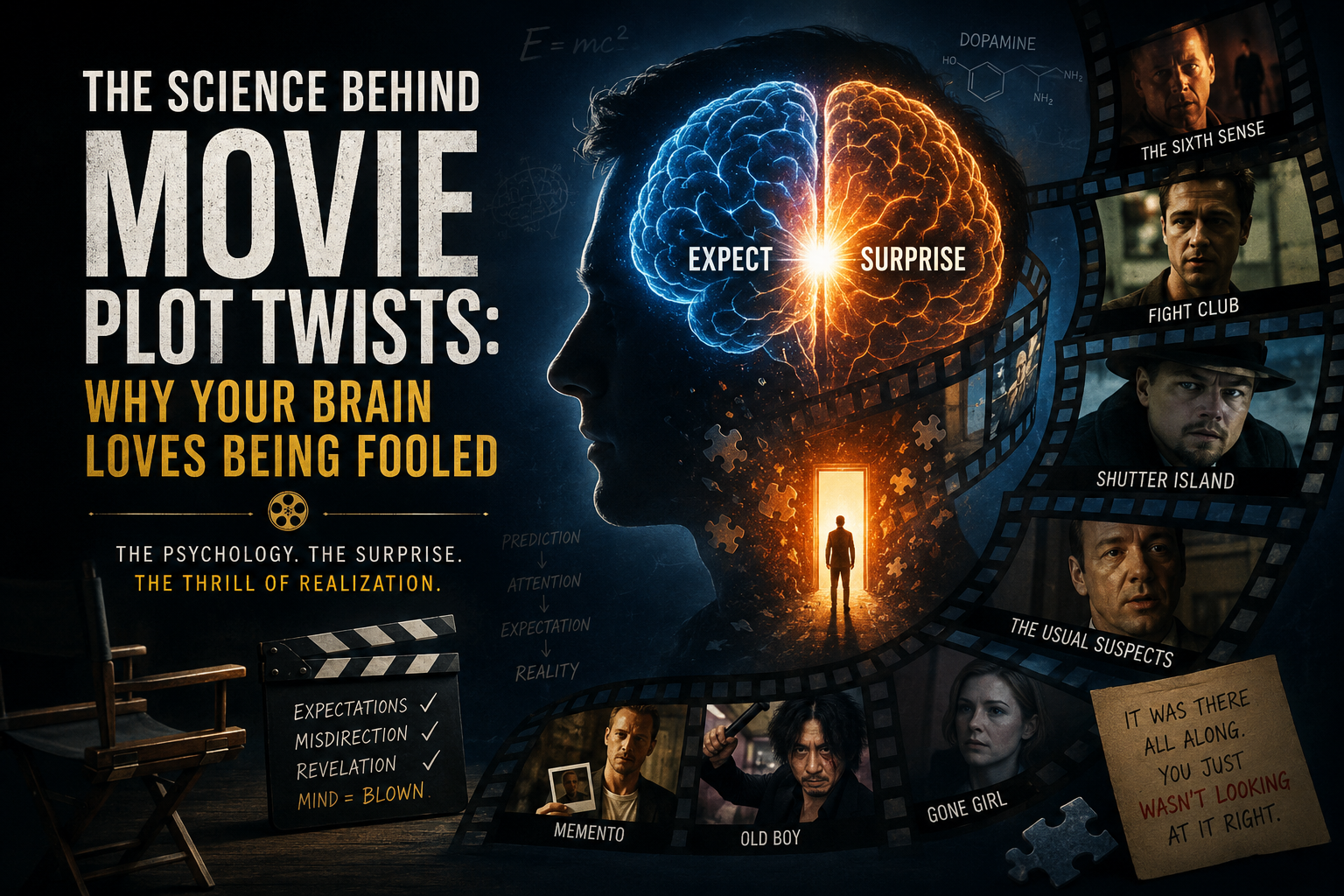
There is a peculiar thrill that comes with watching a film confidently, believing you've solved the mystery, only to have the final few minutes pull the rug from under your feet. Suddenly, everything you thought you knew changes. You replay earlier scenes in your mind, connect forgotten details, and realize the clues were always there.
That feeling is no accident. Great plot twists are not just clever writing. They are carefully designed psychological experiences that take advantage of how the human brain processes information, builds expectations, and remembers stories.
Your Brain Is Constantly Predicting the Story
The human brain dislikes uncertainty. While watching a film, it is constantly searching for patterns and trying to predict what will happen next. This habit helps us make sense of the world, but it also makes us vulnerable to surprise.
Filmmakers understand this remarkably well. Instead of hiding the truth, they often present information in ways that encourage us to form the wrong conclusion.
Take The Sixth Sense. Viewers believe they understand the story because the film quietly guides them toward one interpretation. When the final revelation arrives, the brain is forced to revisit every previous scene from an entirely different perspective. That mental reorganization is what makes the twist so satisfying.
Misdirection Is Cinema's Greatest Magic Trick
Much like a magician distracts your eyes before revealing the trick, filmmakers manipulate your attention.
In The Prestige, every scene contains information that feels important. Yet your focus is subtly directed toward the wrong questions. By the time the truth emerges, you realize the film has been honest all along. You simply noticed the wrong details.
This technique works because our brains naturally prioritize information that confirms our existing beliefs. Psychologists call this confirmation bias. Once we commit to a particular theory, we unconsciously ignore evidence that challenges it.
A successful plot twist doesn't deceive us by lying. It deceives us by allowing our own assumptions to do most of the work.
The Reward of Being Wrong
It may sound strange, but our brains often enjoy discovering that they were mistaken.
When a twist lands perfectly, it creates what psychologists call a prediction error. Reality suddenly differs from what we expected. Instead of causing frustration, this surprise activates the brain's reward system, releasing dopamine, the neurotransmitter linked to curiosity and learning.
This is one reason films like Fight Club, The Usual Suspects, and Gone Girl remain unforgettable. Their twists do more than shock audiences. They reward viewers with the excitement of solving a puzzle they didn't even know they were assembling.
The surprise becomes memorable because the brain treats unexpected discoveries as valuable information worth storing.
Why Some Twists Stay With Us for Years
Not every plot twist becomes iconic. Some are forgotten moments after the credits roll, while others spark endless discussions.
The difference lies in emotional impact.
Consider Shutter Island. Its final revelation does not simply alter the plot. It transforms the audience's understanding of guilt, grief, and identity. The twist changes the emotional meaning of everything that came before it.
Similarly, Oldboy delivers one of cinema's most disturbing twists because it attacks deeply held emotions rather than relying solely on surprise. The audience is left questioning morality, revenge, and human nature long after the film ends.
When a twist reshapes both the story and its emotional core, it becomes difficult to forget.
The Best Plot Twists Reward a Second Viewing
One sign of exceptional storytelling is rewatchability.
Many great twist-driven films become richer once you know the ending. Instead of losing their appeal, they reveal hidden layers that were invisible the first time.
Christopher Nolan's Memento is a perfect example. Knowing the truth changes the significance of every conversation and every decision. The film becomes less about discovering the ending and more about understanding how memory shapes reality.
The same is true for Arrival. What first appears to be a science fiction mystery gradually reveals itself as something far more emotional, giving earlier scenes an entirely new meaning.
Great twists do not erase the story that came before. They deepen it.
We Love Being Outsmarted
People often say they hate spoilers because they ruin the surprise. In reality, spoilers rob us of something even more valuable: the experience of our own minds changing.
The finest plot twists remind us that our perception is never as reliable as we believe. They expose our assumptions, challenge our confidence, and invite us to see familiar events through a different lens.
Perhaps that is why we keep returning to films with unforgettable endings. For a brief moment, cinema convinces us that reality is one thing, only to reveal that it was something else entirely.
And strangely enough, our brains love every second of being fooled.